A mind is a boundary that funds its own superposition.
Superposition means holding more than one possibility open at the same time. Holding them open costs energy. A mind is the thing that pays.
It starts with collision.
Atoms hit each other. Heat flows from hot to cold because of who hit whom. Nothing at this level wants anything, and nothing is at stake.
- Collision is the base. Things hit things.
- Registration is a collision that leaves a record.
- Competition is collision with a stake.
- Mind is funded collision: a boundary paying to make the impacts count.
Where the meter starts.
Atoms don't pay to persist either. It's only at artificial boundaries, or life, that it becomes necessary.
A rock stays a rock for free. A cell does not stay a cell for free. Its wall holds only while the pumps in it keep working, and the pumps run on energy the cell has to find. When the payment stops, the wall gives way and the inside becomes the outside.
So the meter starts at the first edge that has to be paid for. Before that edge there is collision. After it there is something with a stake in what hits it.
A trained model stored on a disk shows the other side of the line. It holds a huge record of past competitions, and it pays nothing to keep it. Sitting there, it is inventory. Where the funding stops, mind stops, whatever the record says.
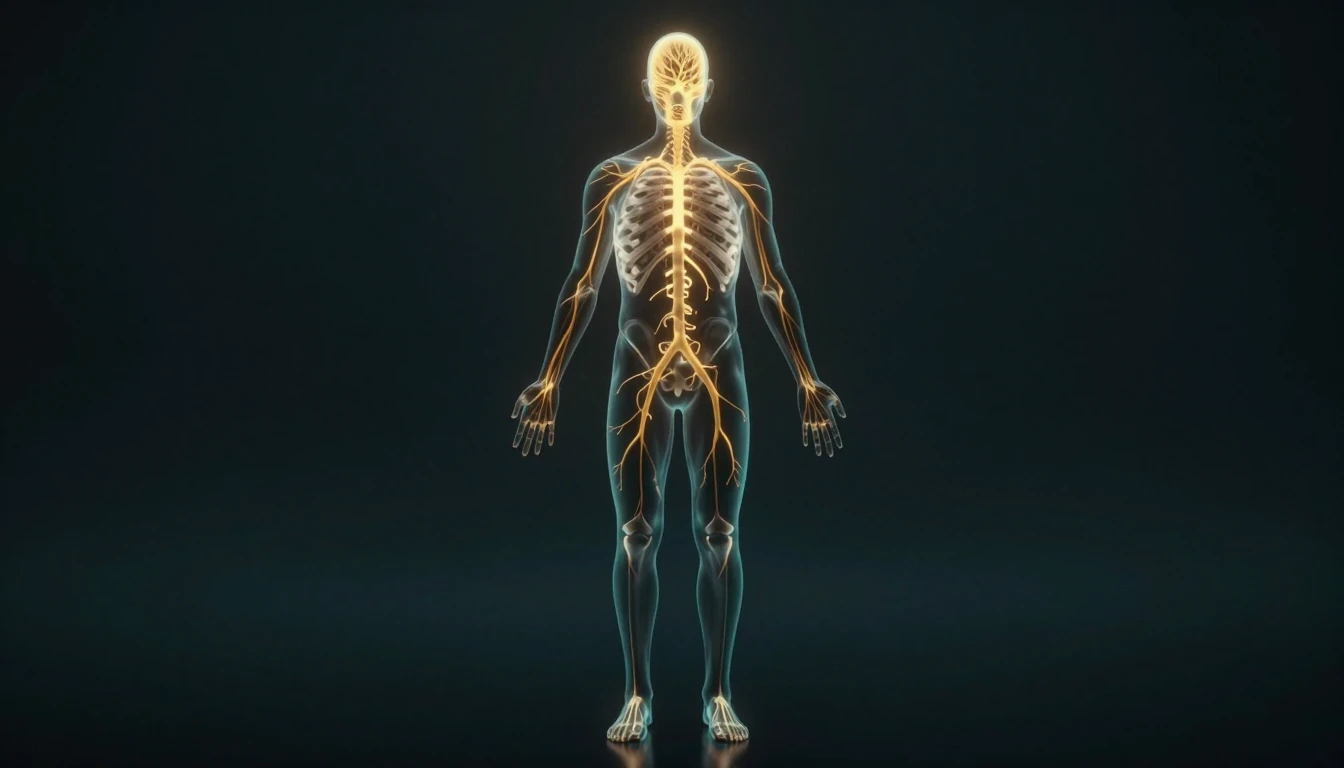
You are a stack of boundaries.
A cell holds its wall inside a tissue. The tissue holds its shape inside an organ, the organ inside a body, and the body inside a family and a town. Every level pays for its own edge.
The levels work together most of the time. Sometimes they pull against each other. A tumour is a group of cells still paying for themselves when the body's own boundary no longer holds them. Agency follows the funding.
The one you call "I" is the boundary you live along the edge of. It is not the only one in you.
Awareness comes in grades.
Awareness here means coordinating many different kinds of record. Four things set how much of it a system has.
- Diversity
- How many different kinds of record the system takes.
- Coordinating
- Whether it uses those records to predict itself.
- Funded
- Whether it pays, in energy, to keep holding them.
- Depth
- Whether it collides with futures before they arrive. A brain rehearses paths through a maze before it has run them.
| System | Diversity | Coordinating | Funded | Depth | Awareness |
|---|---|---|---|---|---|
| Atom | almost none | no | no | none | almost none |
| Heat flowing | low | no | no | none | almost none |
| A disk or a book | high | fixed | no | none | none |
| Cell | real | predicts itself | yes | one level | above none |
| Brain | high | predicts itself | yes | two levels or more | high |
Three ways to prove it wrong.
Any one of these kills the claim.
- Awareness is found in a system that is spending no power.
- Awareness jumps from one level to another while depth changes smoothly.
- A system adapts, and how well it adapts has nothing to do with the power it spends.
The framework also makes a prediction that can be checked. A person coming out of anesthesia does not switch back on. Awareness dims and returns by degrees, because each of the four things above comes back by degrees.
Nobody designed the rest.
We weren't designed to have memories and skills. To love and to plan. That fell out.
Once one boundary pays to predict what is coming, its neighbours have to pay to predict it back. Each side raises the other. Memory, skill, planning and love came out of that climb. No one had to put them in.
Go further
See it at work.

If you found this service helpful, please think of donating to keep it running and to make more services like this possible.
Every donation goes to CASH (cashvalues.org) and feeds its mission in the real world.
Donate to CASH